




No catch for the day: Pakistan's tuna trade caught in US-Iran crossfire
Web desk
|
13 Aug 2026
In Iranian waters, a strange trade is taking place, Pakistani fishermen exchange subsidised Iranian fuel for high-value tuna, a barter system now under threat from escalating US-Iran tensions.
Shah Zamin Khan is among thousands of Pakistani tuna traders whose lucrative business has been at a near standstill since February, when the US-Israeli war on Iran began.
The recent targeting of Iranian seaports by Washington has made matters worse.
Iran’s southern ports of Konarak, Pasabandar and Beris, which border Pakistan’s southwestern Balochistan province and serve as key fish trade hubs, are among the sites targeted by US airstrikes in recent weeks.
“Our businesses were already affected by the war, but the recent targeting of Iranian seaports has turned the region into a no-go area for us over the past one month,” Khan told Anadolu.
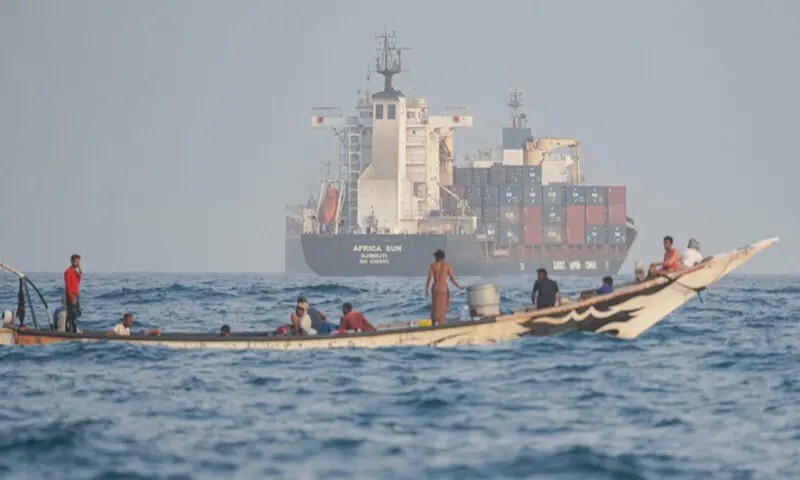
An image of fishing boats. — Photo courtesy of Zofeen Ebrahim/File
Boat owners, according to Khan, have completely stopped sending their vessels to the Iranian ports for fear of US strikes.
In July, three fishermen were killed and 15 others injured in a US strike on a commercial fishing pier in the coastal city of Sirik in Iran’s southern Hormozgan province.
Earlier in March, a 17-year-old Pakistani fisherman was killed after debris from an intercepted projectile struck his vessel in the Arabian Sea.
Tuna is a staple in Iranian kitchens, but it has little demand in Pakistan, leaving fishermen with few options for selling their catch.
“There is not even a single company in Pakistan to buy our tuna. Iran is the only option for us,” said Hussain Baloch, another fisherman involved in tuna trade.
Speaking to Anadolu, he said that tuna fetches prices six to seven times higher in the Iranian market than in Pakistan.
Without access to the Iranian market, he went on to say, the entire tuna fishery would collapse, threatening both income and employment for thousands of fishermen.




Comments
0 comment