




Qatar-based British-Pakistani scientist develops AI eye scan for early dementia diagnosis
Web desk
|
22 May 2026
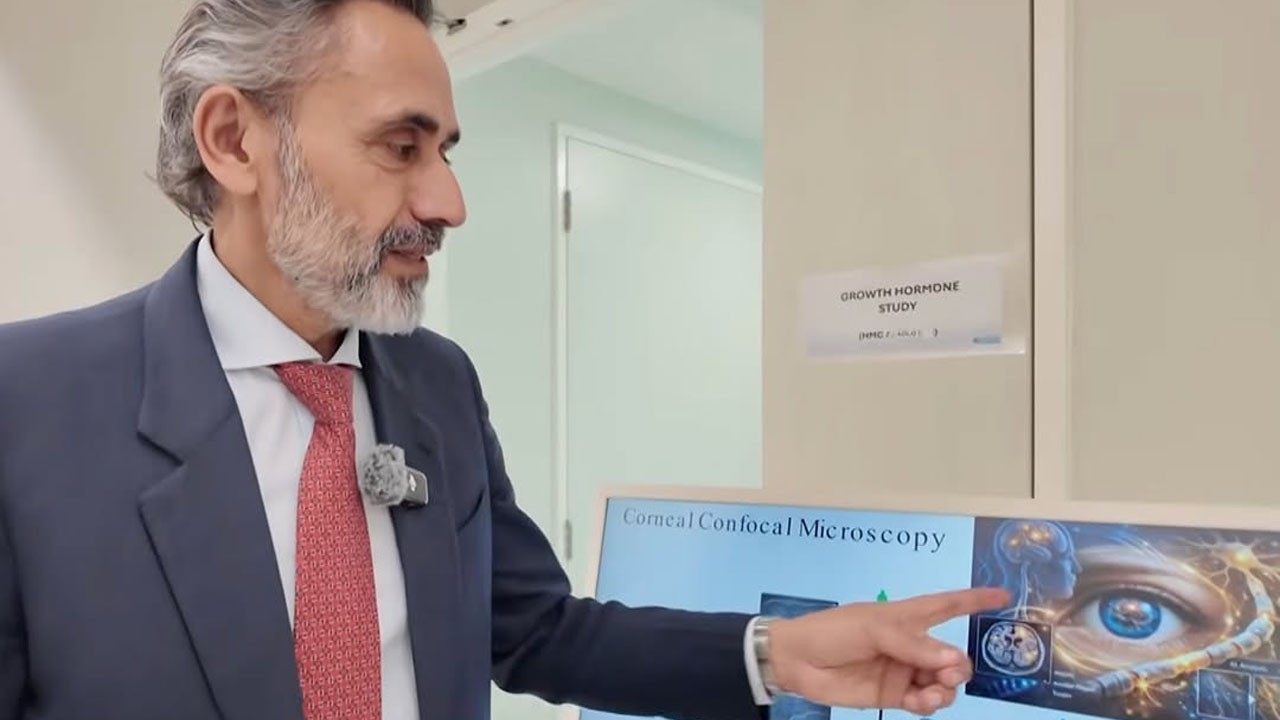
WASHINGTON: Professor Rayaz Malik, a British-Pakistani scientist based in Qatar, says a simple AI-powered eye scan lasting just a few minutes could soon help doctors detect dementia and diabetic nerve damage years before symptoms appear.
Professor Malik, who researches diabetic neuropathy and neurodegenerative diseases at Weill Cornell Medicine-Qatar, said the technology, known as corneal confocal microscopy (CCM),can identify microscopic nerve damage through scans of the cornea, which contains one of the body’s densest nerve networks.
Initially used to diagnose eye infections and surface abnormalities, CCM was later found capable of detecting nerve fibre damage linked to conditions including diabetes, Parkinson’s disease, multiple sclerosis, schizophrenia, autism and dementia. Research over the past two decades has shown the scan can reveal neurological damage years before traditional symptoms emerge.
Professor Malik said one of the technology’s most important uses is the early detection of dementia. He explained that patients are often diagnosed only after nerve damage has progressed for more than a decade, while CCM may identify abnormalities during the early stage known as mild cognitive impairment.
He added that diabetic neuropathy could also be detected up to five years earlier, allowing treatment to begin sooner.
Artificial intelligence has significantly improved the accuracy of the technology by enabling rapid analysis of thousands of nerve image features.
According to Professor Malik, AI systems can now identify certain neurodegenerative diseases with up to 95 per cent accuracy. He said newer and more affordable CCM machines could help expand access to the technology in developing countries such as Pakistan, where diabetes rates continue to rise.










Comments
0 comment