




Fazlur Rehman vows to resist ‘anti-Islam laws’
Web Desk
|
11 Feb 2026
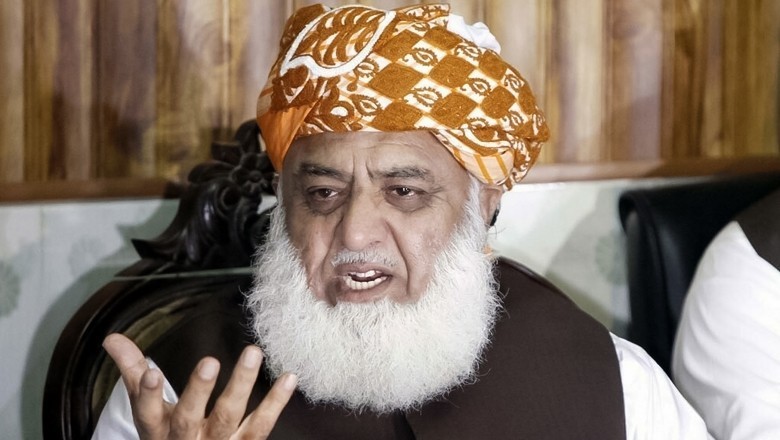
JUI-F leader Maulana Fazlur Rehman, while addressing a press conference, issued a stern warning to the government as well as the coalition partners, saying, “I will not accept any law that contradicts the Quran and Sunnah even if it was passed by a majority in parliament.”
Addressing a gathering in Islamabad, JUI-F’s emir stated that “Obeying laws based on disobedience to the Creator was not permissible or binding.”
"Our position is very clear," he told reporters, adding that even imprisonment and the death penalty did not discourage him. "Jail is a very minor thing; hanging is a very minor thing. If there is anything beyond that, we are ready to accept that."
He claimed that he had been repeatedly informed "politics was no longer the domain of decent people" and questioned his presence in politics as a "respectable man."
He, in turn, refuting the notion, stated that politics, in fact, was the management of national life, collectively, and an open field.
Politics is the inheritance and mission of the prophets; politics is a lamentable pursuit of power through rigging and manipulation. "Those who reach power through rigging are called great politicians."
Recalling the ideological roots of his party, the JUI-F chief stated that scholars from all over the subcontinent, without any discrimination based on sects, remained part of this movement.
He further stated that his party was leading the struggles both to achieve freedom and to achieve the title of Caliphate. He emphasized the point that religious scholars are considered to be the real heirs to prophets, just as no one except scholars was allowed to remain at the pulpit of Muhammad; no one was more deserving to occupy the political seat.
Blasting the politics of opportunism, Fazl said that in the current situation, people shifted their loyalties if they were not offered party tickets for the elections. He said that although there were no Jews or followers of any idols in the society, the bad practices of the two were evident.
Condemning the practice of opportunism in politics, Fazl remarked, “Today, in this era, if people are not given party tickets, they leave their parties." He further remarked, “Though no idol worshippers and Jews are seen in our society, the bad traits associated with these communities have crept into the political circles."
Referring to the Quran, he said it says something about workers who remain sincere, while others become satisfied when the benefits are given to them, and resentful when they are not given. He emphasized the need to identify and confront the self-serving attitude.
He pointed out that political leaders claim piety, for example, by praying, but expressed concerns over the political systems and laws they were introducing to the country. "We have no objection to anyone's prayers or fasting," said John Alembata, but raised problems related to political systems and laws, not individual prayers and fasting.
According to the emir of the JUI-F, laws that were not in accordance with the Quran and Sunnah were made through majority votes, and his refusal to abide by these laws was considered an affront to the law itself.









Comments
0 comment