




Naqvi rules out govt early exit, says will complete term
Web desk
|
6 Aug 2026
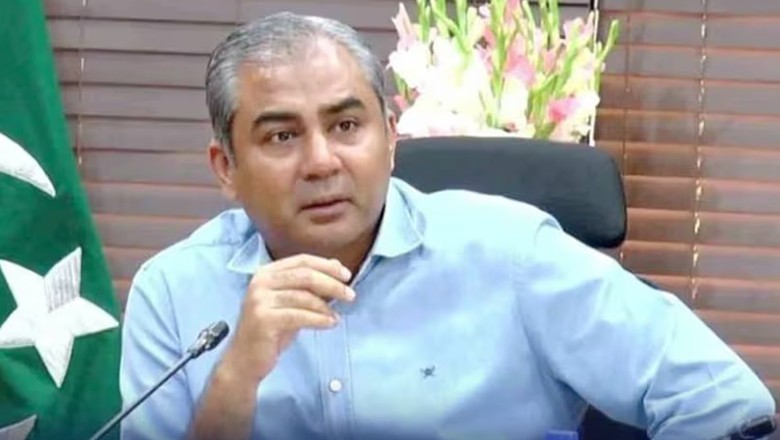
Interior Minister Mohsin Naqvi stated on Wednesday that the current government would complete its full five-year constitutional term, emphasizing that Prime Minister Shehbaz Sharif would remain in office for the entire duration.
While speaking to journalists in Lahore, Naqvi rejected rumors about the government's possible collapse, insisting that the existing political setup was stable. He said there was no truth to speculation about an early end to the government and maintained that the prime minister would continue serving his full term.
Addressing questions about his absence from a recent cabinet meeting and criticism of his performance, Naqvi said he was accountable only to the prime minister. He proposed that the prime minister conduct a comprehensive performance review of all federal ministries and publicly release the findings so citizens could assess the effectiveness of each ministry. He also noted that he had attended approximately 70 percent of cabinet meetings.
Naqvi denied claims that he had criticized the government itself, pointing out that he was a member of the cabinet. He clarified that his earlier comments about the collapse of the system referred to Pakistan's governance structure, which he believes has steadily deteriorated over the past eight decades.
According to Naqvi, the country's long-standing administrative system has failed to function effectively, limiting Pakistan's development. He argued that if the governance framework had been stronger, the country would have made much greater progress.
He praised Prime Minister Shehbaz Sharif for his commitment and work ethic, saying the premier regularly works between 14 and 16 hours a day. Naqvi added that such dedication could produce far better results if supported by an efficient administrative system.
Highlighting recent achievements, Naqvi said the government had implemented important reforms despite facing significant challenges. He pointed to improvements in the Federal Board of Revenue (FBR), successful diplomatic efforts, and other reforms as evidence of progress. He maintained that Pakistan could have advanced much faster if the prime minister had inherited a more effective governance system.
Naqvi also claimed that some individuals were attempting to create misunderstandings between him and the prime minister.
His remarks followed his recent call for restructuring Pakistan's governance model by creating additional administrative units or provinces. Speaking at the Pakistan Economic Summit 2026 in Islamabad, he argued that the country's centralized system had failed to deliver effective governance and that decentralization was necessary to improve public services, speed up justice, and create greater opportunities for the country's youth.
The following day, ISPR Director General Lt Gen Ahmed Sharif Chaudhry expressed support for the idea of administrative reform, stating that if changes were needed to improve governance, they should be implemented through constitutional, legal, and democratic processes. However, he avoided commenting directly on Naqvi's statement regarding governance in Balochistan.
Naqvi's comments triggered mixed reactions within the Pakistan Muslim League-Nawaz (PML-N). Prime Minister's Adviser Rana Sanaullah criticized the interior minister, questioning how someone who had risen to one of the country's highest offices through the existing political system could now condemn that same system.
In contrast, Defence Minister Khawaja Asif largely supported Naqvi's assessment, agreeing that the country's governance system required significant improvements. However, he stressed that discussions on such major reforms should take place in parliament or within the federal cabinet. Asif also noted that Naqvi, having held several influential positions over the past three and a half years, had ample opportunities to raise these issues through official channels.






Comments
0 comment