




China tests innovative sea-net system to recover rocket booster
Web Desk
|
10 Jul 2026
China on Friday carried out the first successful recovery of an orbital-class rocket using a net mounted on an offshore platform, state media reported, marking a significant step in the country's efforts to develop reusable launch vehicles.
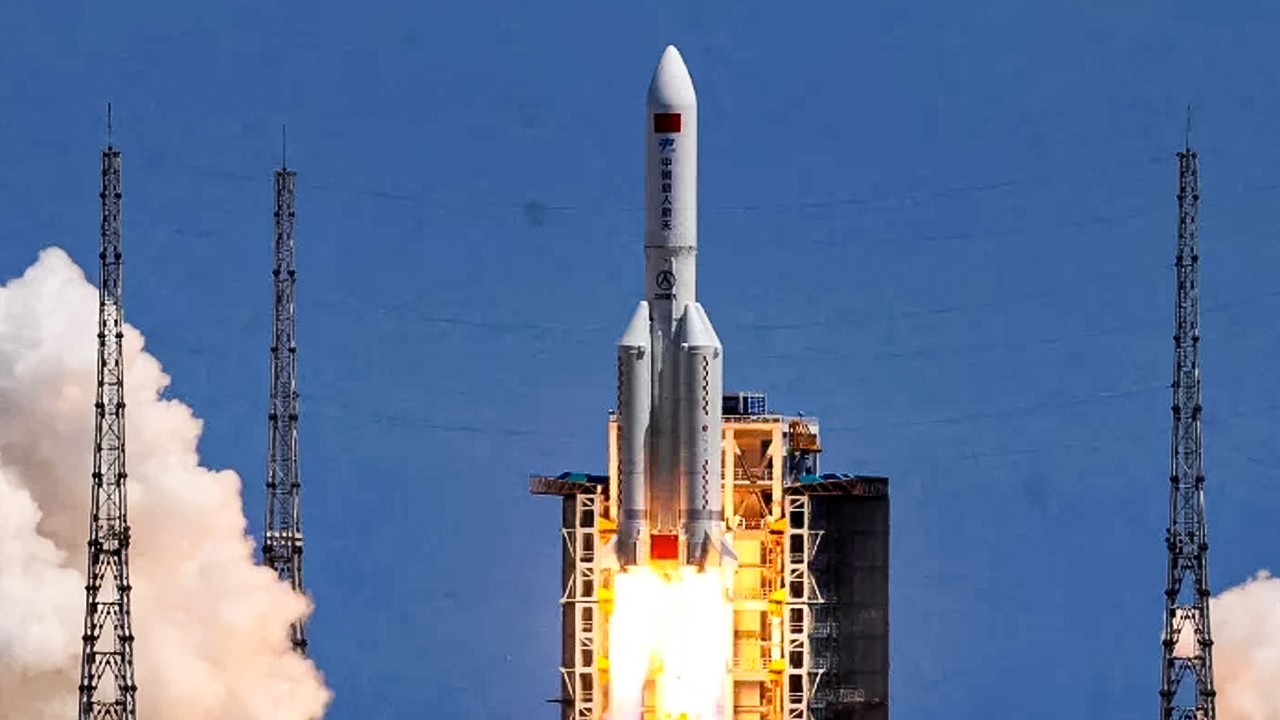
According to state broadcaster CCTV, the Long March 10B rocket lifted off from the Hainan commercial space launch site at 12:15pm local time (9:15am PKT). About six minutes after the booster separated from the upper stage, it returned vertically and was successfully captured by a net installed on a sea platform.
State media said the mission also placed a satellite into its planned orbit. The successful test is seen as a milestone in China's reusable rocket programme, which aims to narrow the gap with the United States in reusable space technology.
Following the announcement, shares of several Chinese aerospace companies, including China Spacesat and China Satellite Communications, rose to their daily trading limits. Developed by the China Academy of Launch Vehicle Technology (CALT), the Long March 10B is designed to carry payloads of at least 16 tonnes into low-Earth orbit and has often been compared with SpaceX's Falcon 9 rocket.
Unlike the Falcon 9, which lands on deployable legs, the Long March 10B uses four landing hooks to attach to a net fixed on a floating recovery platform. CALT expert Chen Muye told Xinhua that the net-based recovery system reduces the rocket's weight, increases payload capacity and allows greater flexibility by accommodating slight variations in the landing position.
SpaceX achieved the first successful landing of a Falcon 9 booster after an orbital mission in 2015. Since then, reusable rockets have become central to its launch operations, with Falcon 9 boosters being flown multiple times each year.










Comments
0 comment