




Gulf nations won't be 'safe haven' for US: Khamenei
Web desk
|
27 May 2026
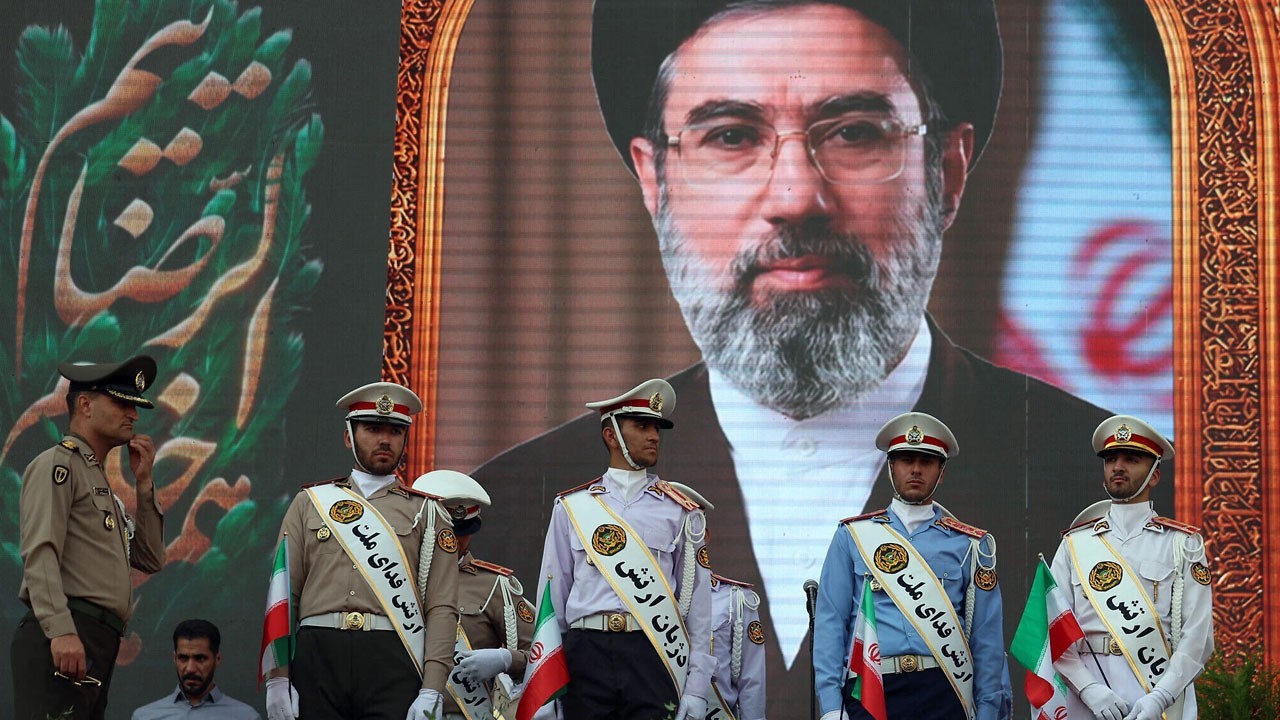
Supreme Leader of Iran Ayatollah Mojtaba Khamenei has appealed to all countries in the region to unite and realign, asking "all Islamic countries to join us in the way of friendship and cooperation" and also calling upon all Middle Eastern nations to abandon foreign military bases in their territories amid growing tensions after new American airstrikes.
In a statement published in his Telegram account, Khamenei emphasized that American influence in the region was diminishing and that "the era of strategic dominance of America in this region is approaching its end."
"The situation cannot be reversed, and neither the nations nor the lands of the region will ever be able to provide a safe place for American military bases," he stressed, noting that "America moves away from the previous position, day after day."
"From today onward, 'Death to America' and 'Death to Israel' will be the slogans of the Islamic world and the slogans of the oppressed peoples of the world, especially youths," he concluded. "The United States no longer have a safe shelter in this region for any attacks."
This development comes after Iran accused the U.S. of breaking an uneasy ceasefire following new attacks by the Americans against missile installations and boats suspected of participating in mine-laying near the Strait of Hormuz.
In a statement, Iran's foreign ministry referred to the American attack as a "gross violation" of the ceasefire which was brokered on April 8, and asserted that the country "will not leave any evil unanswered and will not hesitate to defend the Iranian nation."
According to Iranian news sources, there were explosions last night near the Bandar Abbas area of southern Hormozgan province, close to the Strait of Hormuz, while the Revolutionary Guards have announced that they shot down a U.S. drone and also shot down another unmanned aircraft along with an F-35 fighter aircraft that flew into Iranian airspace.
On the other hand, the U.S. has stated that their operations are purely defensive. As per a statement released by U.S. Central Command, forces under their command attacked missile launch sites and boats that were attempting to emplace mines in the Gulf.
"There were some talks going on in Qatar today, so we'll see if we can make progress," Rubio said during a visit to India, adding that the Strait of Hormuz must remain open "one way or the other."
The conflict, which erupted following US-Israeli strikes on Iran on February 28, has severely disrupted global energy flows and triggered volatility across markets. Roughly one-fifth of global oil and liquefied natural gas normally passes through the Strait, but shipping has dropped sharply since the outbreak of hostilities.
At the centre of ongoing negotiations in Doha, Iranian officials have reportedly been pressing for the release of frozen assets as part of any initial agreement. Iranian media said Tehran is seeking access to around $24 billion in blocked funds, with about $12 billion expected to be released in an early phase of a deal.
Iran's parliamentary speaker Mohammad Bagher Ghalibaf, Foreign Minister Abbas Araghchi and Central Bank Governor Abdolnaser Hemmati were among senior officials who travelled to Qatar for talks with Qatari leadership on the proposed framework.




Comments
0 comment