




Qatari PM urges caution, says 'external circumstances' may affect US-Iran talks
Web desk
|
22 Jun 2026
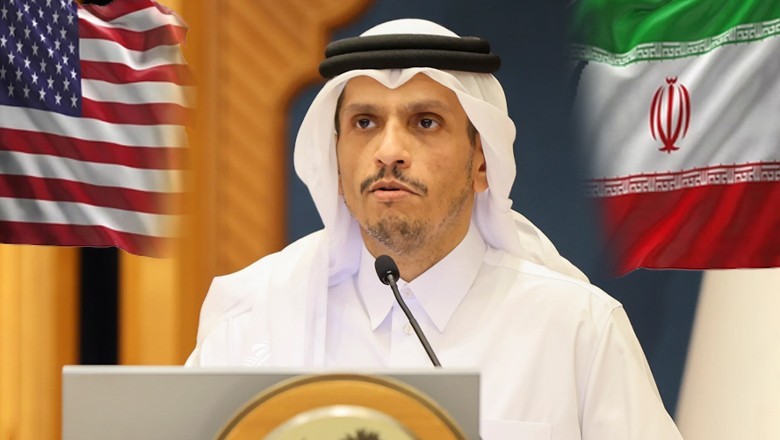
Qatari Prime Minister Sheikh Mohammed bin Abdulrahman Al Thani urged caution regarding ongoing US-Iran negotiations, noting that although both sides appear committed to dialogue, external factors could still disrupt progress.
Speaking to Al Jazeera on Monday, Sheikh Mohammed said that a recently signed memorandum of understanding (MoU) between Washington and Tehran helped bring an end to hostilities and established a basis for future negotiations. He explained that the agreement was achieved through extensive efforts involving Qatar, Pakistan, and regional partners.
According to the Qatari premier, the MoU’s primary purpose was to halt the conflict and create a structured framework for talks. The agreement requires regular meetings between the two sides to address unresolved issues and provides an institutional mechanism to guide negotiations.
Sheikh Mohammed described the framework discussed during talks in Switzerland as encouraging, with technical discussions still underway. He emphasized that any eventual agreement between the United States and Iran would have significant implications for the wider region.
He also revealed that both sides agreed to establish a direct communication hotline to help manage disputes. Under the MoU, Iran has committed to ensuring safe navigation through the Strait of Hormuz within 60 days. Reaffirming Qatar’s position, Sheikh Mohammed stressed the importance of keeping the strategic waterway open and maintaining freedom of navigation.
The prime minister further noted that Gulf countries share a common approach of engaging Iran through dialogue. He expressed hope that the current diplomatic momentum could also contribute to advancing the Palestinian cause and achieving Palestinian statehood.
Addressing Lebanon, Sheikh Mohammed called for an end to Israel’s occupation of Lebanese territory and stressed the need to respect Lebanon’s sovereignty. He also accused Israeli Prime Minister Benjamin Netanyahu of repeatedly contributing to regional tensions.
Meanwhile, Iranian Foreign Minister Abbas Araghchi said that US-Iran talks in Switzerland, facilitated by Pakistan and Qatar, had made substantial progress toward ending the conflict in Lebanon and reducing economic pressure on Iran.
The first round of four-party discussions involving Iran, the United States, Pakistan, and Qatar concluded in Switzerland. These talks marked the first formal follow-up meeting after the electronic signing of the agreement earlier in the week.
A joint statement from Pakistan and Qatar announced that the United States and Iran had agreed on a roadmap aimed at reaching a final settlement within 60 days. The plan includes a mechanism to end hostilities between Israel and Hezbollah in Lebanon and the establishment of communication channels to safeguard commercial shipping through the Strait of Hormuz, a critical route for global energy supplies.
Technical negotiations will continue throughout the week in the Swiss resort of Bürgenstock. A dedicated communication channel will also be established to prevent misunderstandings and accidental escalations during the talks.
The statement additionally announced the formation of a Pakistan-Qatar-supported de-confliction cell involving Lebanon to monitor compliance with commitments related to ending military operations there.
Prime Minister Shehbaz Sharif welcomed the successful conclusion of the first high-level committee meeting under the Islamabad MoU framework. He described the discussions as productive and positive, highlighting progress toward a final agreement within two months.
In a post on X, Shehbaz Sharif said the meeting had concluded successfully and resulted in key achievements, including agreement on a 60-day roadmap, the creation of a high-level committee to provide political oversight, and the launch of further technical negotiations.
He praised both the United States and Iran for maintaining their commitment to diplomacy and constructive engagement, expressing appreciation for their continued willingness to pursue dialogue and peaceful solutions.




Comments
0 comment