




Unsafe building, hygiene issues plague Public Agro Technical School in Malir
Web Desk
|
16 Jun 2026
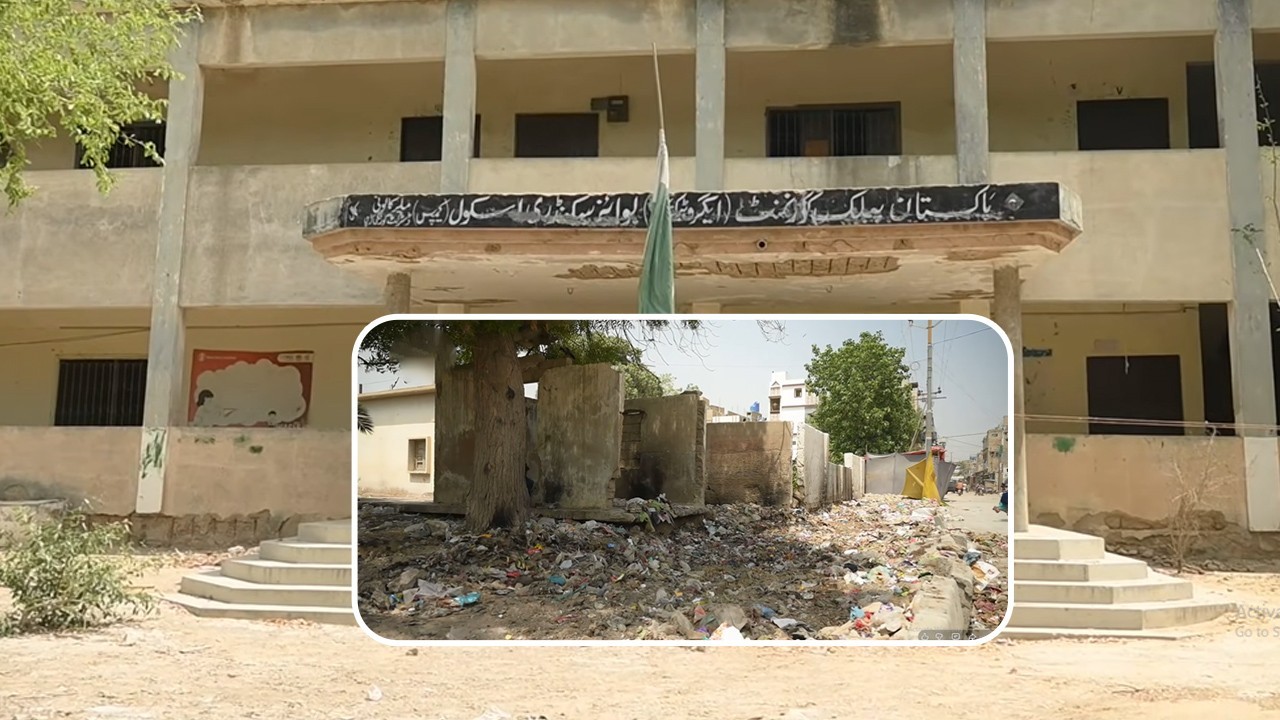
The condition of Pakistan Public Agro Technical School in Malir has raised serious concerns over student safety, hygiene, and the overall standard of education at the institution.
During a recent inspection visit by the Dialogue Pakistan team, Sir Ali, a representative of the institution, pointed out multiple structural and administrative shortcomings while reviewing the school premises.
The visit revealed alarming conditions across various sections of the campus.
The most critical issues were observed in the washroom facilities, which were found to be in severely unhygienic condition. These facilities are being used by primary-level students aged approximately 8 to 12 years, despite their visibly unsafe and unsanitary state.
The building itself also shows clear signs of structural deterioration, including a weakening roof and damaged infrastructure.
Officials further noted that a portion of the secondary school building had already been declared unsafe and subsequently vacated. As a result, secondary students have been shifted to an evening shift system.
However, this arrangement has created additional difficulties, particularly for students from low-income households who often engage in part-time work after school hours, affecting both attendance and academic performance.
The inspection also revealed damaged classrooms with crumbling plaster and exposed steel reinforcements. In some cases, ceiling fans installed above students were found to pose safety risks due to irregular electrical fluctuations, causing them to operate at unsafe speeds and creating fear among students and staff.
Reports of minor injuries linked to the deteriorating infrastructure have also been documented in the past, according to officials.
During the visit, Sir Ali stated that the issues reflect broader systemic challenges within the public education sector. He emphasized that addressing infrastructural neglect is essential to ensuring a safe and conducive learning environment for students.
Additional concerns included overgrown vegetation within the school premises, garbage accumulation outside the building, and a persistent foul odor affecting the environment.
Complaints were also raised regarding inadequate drinking water facilities, malfunctioning fans circulating hot air, frequent power outages, and extreme heat conditions that further disrupt the learning process.
Students have also expressed that the shift to evening classes has disrupted their daily routines, including morning schooling and religious education, leading to increased stress and academic difficulty.
The situation at the Malir school highlights broader infrastructural and administrative challenges faced by several government schools across Karachi and Sindh.
Stakeholders have urged the relevant authorities, including the Sindh Education Department and provincial leadership, to take immediate notice and implement urgent measures to ensure safe infrastructure and improved learning conditions for students.





Comments
0 comment