




Climate change hits mango farmers
Web desk
|
30 Mar 2026
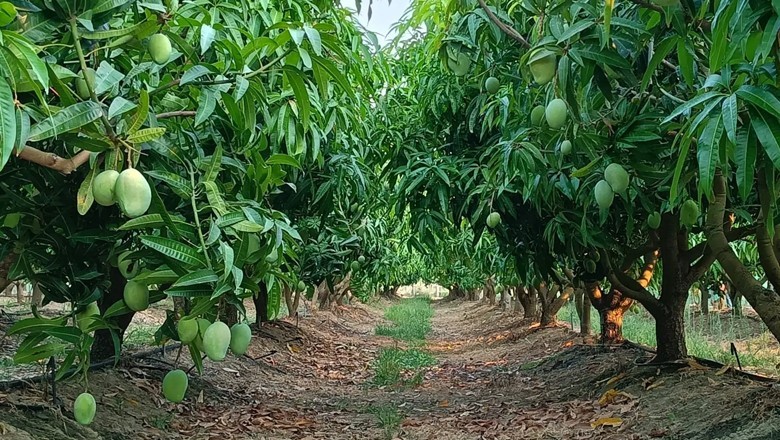
South Punjab's world-famous mango industry is likely to face a setback this season as climate change has been observed to affect the production of Summer Bahisht Chaunsa, one of the world's most sought-after mango varieties in Pakistan.
Farmers in major mango-growing areas in South Punjab's districts of Rahim Yar Khan, Multan, Muzaffargarh, and Khanewal are experiencing unusual crop damage.
According to reports received from local mango farmers, the first week of March saw an unexpected rise in temperature, which disrupted the normal flowering and fruiting pattern in mango crops. While mango trees showed considerable growth in terms of blossom, known as 'boor' in local terminology, the normal growth pattern was disrupted. Experts attribute this to inadequate cross-pollination, as fluctuating weather patterns disrupted normal cross-pollination.
"As the temperature suddenly increased, the flowering showed considerable growth, but the growth did not translate into fruiting as expected," said Shahid Hameed Bhutta, a local progressive farmer.
"Instead, a considerable part of blossom has grown into 'bator,' which is not only useless for fruit production but also harms the tree itself."
Farmers say that 'bator' is a serious disease-like condition that affects mango trees and makes them weaker over time. These clusters not only hinder the growth of mangoes but also serve as breeding grounds for pests. These clusters grow in large size and can weigh almost one kilogramme in weight.
Another alarming situation is the erratic weather pattern, which is changing suddenly from hot to cold and vice versa. Due to such unstable climatic conditions, there is a severe attack of pests, especially 'tila' or mango hoppers, which breed in unstable climatic conditions. Bhutta further stated that the attack of these pests could further intensify in the coming days if the pattern of such unpredictable climatic conditions continues.
"The impact of climate change is now clearly visible," he added. "Even with expensive pesticide sprays, it is difficult to control these pests once they settle inside the affected clusters of mangoes."
South Punjab is considered the backbone of the country’s mango production sector. The districts of Rahim Yar Khan, Multan, Muzaffargarh, and Khanewal together produce a handsome portion of the country’s mango output. The sector is not only helping millions of people directly and indirectly but also contributes significantly to the










Comments
0 comment