




“Masoom hai magar nakhre bhi hain”: Man’s emotional bond with his sacrificial animal Tiraz
Web Desk
|
25 May 2026
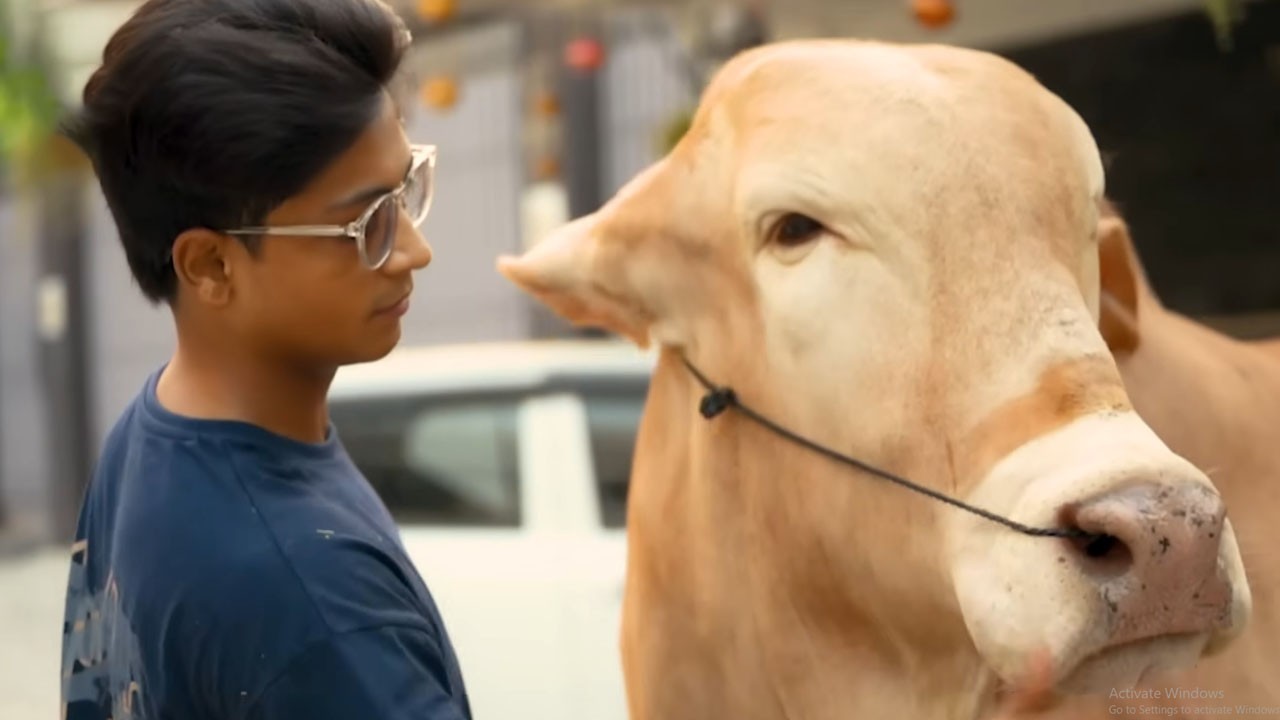
A man speaking to Dialogue Pakistan shared the deep emotional bond he and his family have developed with their sacrificial calf, whom they treat as a full member of the household.
He explained that they named the calf Tiraz, and it has become an inseparable part of their family, receiving immense love and care.
He added that the calf now recognises its name and responds when called from a distance, immediately reacting by lifting its ears as if acknowledging its owner.
The man said calf was originally discovered through a video sent by a friend of his father about three years ago.
"At the time, they were attracted only by its colour and appearance, without considering its breed or future size. “We simply liked him and decided to bring him home,” he said.
However, upon arrival, he admitted their first reaction was disbelief at the purchase. “We thought, what have we bought for 200,000 rupees? He was so small at the time,” he recalled.
Despite initial hesitation, the family placed their trust in Allah and began raising the animal with care.
The calf, having come from Punjab, was initially unsettled and cautious about food and its surroundings. Gradually, however, it adapted to its new environment and developed familiarity and affection towards the family.
He described how the animal became emotionally attached: “When I sit with him, he lifts his head asking for affection. If I sit beside him, he rests his head on my lap and falls asleep. It felt as though he had become like my own son.”
The bond grew stronger over time, with the calf responding affectionately to attention and play. The speaker noted that while the animal can sometimes be energetic and playful in a rough manner, it behaves gently with certain family members, particularly his sister, showing sensitivity and awareness.
Due to safety concerns in a busy neighbourhood, a light restraint was used when taking the animal outside. The calf is active and strong, and requires supervision during movement.
Describing the daily routine, he said he wakes at dawn after Fajr prayer to prepare food for the animal, spending nearly an hour to an hour and a half with it every morning. He ensures it is properly fed before leaving for university.
Upon returning in the afternoon, he cleans the animal’s area and maintains hygiene. “Just as humans need clean homes, animals also require cleanliness and comfort,” he said, adding that the calf is particularly sensitive to dirt and will avoid soiled areas.
The animal’s diet is carefully prepared, including soaked grains, bran, flour, and fruit such as sweet papaya, which it prefers. He also shared that he recites prayers over the food before feeding, a practice rooted in cultural belief for protection and blessing.
After feeding, he personally cleans and grooms the animal using brushes and cloths until it is comfortable and relaxed. Only then does he return to his own routine.
In the evenings, the family often gathers around the animal, sitting together for hours as part of their daily routine, treating it as a shared family companion.
As Eid approaches, he admitted that emotions are becoming increasingly difficult. “Each passing day feels heavier as we count down to its sacrifice,” he said, describing the calf as feeling like a child to the family.
He added that while the intention from the beginning was to raise the animal for Qurbani at home, none of them had expected such a strong emotional attachment to develop.





Comments
0 comment