




1 hour ago
Can Pakistan save its sharks? Inside the country’s first conservation plan
Webdesk
|
10 Sep 2026
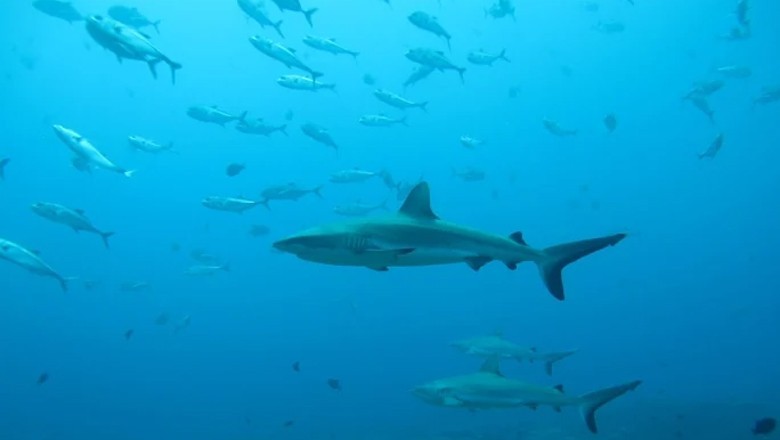
For decades, Pakistan’s waters have supported a diverse range of sharks, rays, skates and other marine species. But growing fishing pressure, illegal finning and accidental catches have placed many of these species under increasing pressure.
Now, Pakistan is taking its first major step towards addressing the decline.
Maritime Affairs Minister Muhammad Junaid Anwar Chaudhry has announced the country’s first national action plan for shark conservation — a 10-year strategy aimed at protecting shark populations, improving fisheries management and promoting more sustainable use of marine resources through 2035.
The National Plan of Action for the Conservation and Management of Sharks (NPOA) comes at a time when concerns over Pakistan’s declining shark resources have intensified.
A 2021 assessment by the World Wide Fund for Nature-Pakistan (WWF-P) found that shark A 10-year plan for Pakistan’s sharks landings in Pakistan had fallen by more than 85 per cent over five decades.
The new plan therefore represents more than a conservation initiative. It is an attempt to address the pressures that have contributed to the decline while balancing marine protection with the economic needs of coastal communities.
A 10-year plan for Pakistan’s sharks
The NPOA will be implemented in three phases and is expected to require between $3.8 million and $5 million during its first five years.
The strategy focuses on several key areas, including reducing illegal shark finning, limiting bycatch, protecting important marine habitats and encouraging sustainable fisheries.
Among its proposed measures are mandatory “fins-naturally-attached” policies, species-specific protections and the creation of shark sanctuaries.
The plan also proposes mangrove restoration and measures to reduce the number of sharks killed unintentionally as bycatch in fishing operations.
Although sharks are at the centre of the initiative, the plan covers all chondrichthyan species found in Pakistani waters. These include sharks, rays, skates and chimaeras.
Chaudhry said the systems established under the plan would also benefit other elasmobranch species by improving data collection, enforcement and fisheries management.
Why the decline matters
Sharks are often portrayed primarily as predators, but their role extends beyond that image. As part of marine ecosystems, they contribute to maintaining ecological balance.
Pakistan’s sharp decline in shark landings has raised concerns about the sustainability of fishing practices and the condition of marine resources.
The WWF-P assessment found that shark landings had declined by more than 85 per cent in five decades — a fall that was greater than the average decline recorded globally.
The conservation challenge is therefore not limited to protecting individual species. It also involves improving the way marine resources are monitored and managed.
The government’s new plan aims to address this through stronger enforcement, scientific research and better collection of information on shark populations.
Protecting sharks while supporting fishing communities
Conservation measures can have a direct impact on fishing communities whose livelihoods depend on the sea.
The NPOA therefore includes targeted support for coastal communities while encouraging sustainable fishing practices.
The government also plans to promote sustainable shark fisheries and strengthen international cooperation, including through Pakistan’s participation in the Indian Ocean Tuna Commission.
The plan will be overseen by a multi-stakeholder National Advisory Committee.
From policy to implementation
Performance indicators will include landing-site monitoring, completion of stock assessments, use of vessel monitoring systems and reductions in shark mortality caused by bycatch.
Formal reviews will take place every three years.
The announcement of a national shark conservation plan is a significant policy development, but its success will ultimately depend on implementation.
Pakistan will need effective monitoring, enforcement and reliable scientific data to determine whether shark populations are recovering.
The plan also seeks to bring Pakistan’s fisheries management closer to international conservation standards. Chaudhry said its preparation fulfils the country’s responsibilities as a shark-fishing nation under international fisheries law.
The strategy is aligned with the Food and Agriculture Organisation’s International Plan of Action for Sharks, which encourages countries to develop national conservation and management plans, reduce waste and promote sustainable fishing.
For Pakistan, the challenge now is to turn the policy into measurable change in the country’s waters.
With shark populations already showing a steep long-term decline, the next decade could determine whether the country’s marine predators continue to disappear or begin to recover.










Comments
0 comment