




Ishaq Dar calls UAE president’s Pakistan visit ‘highly successful’
Web Desk
|
27 Dec 2025
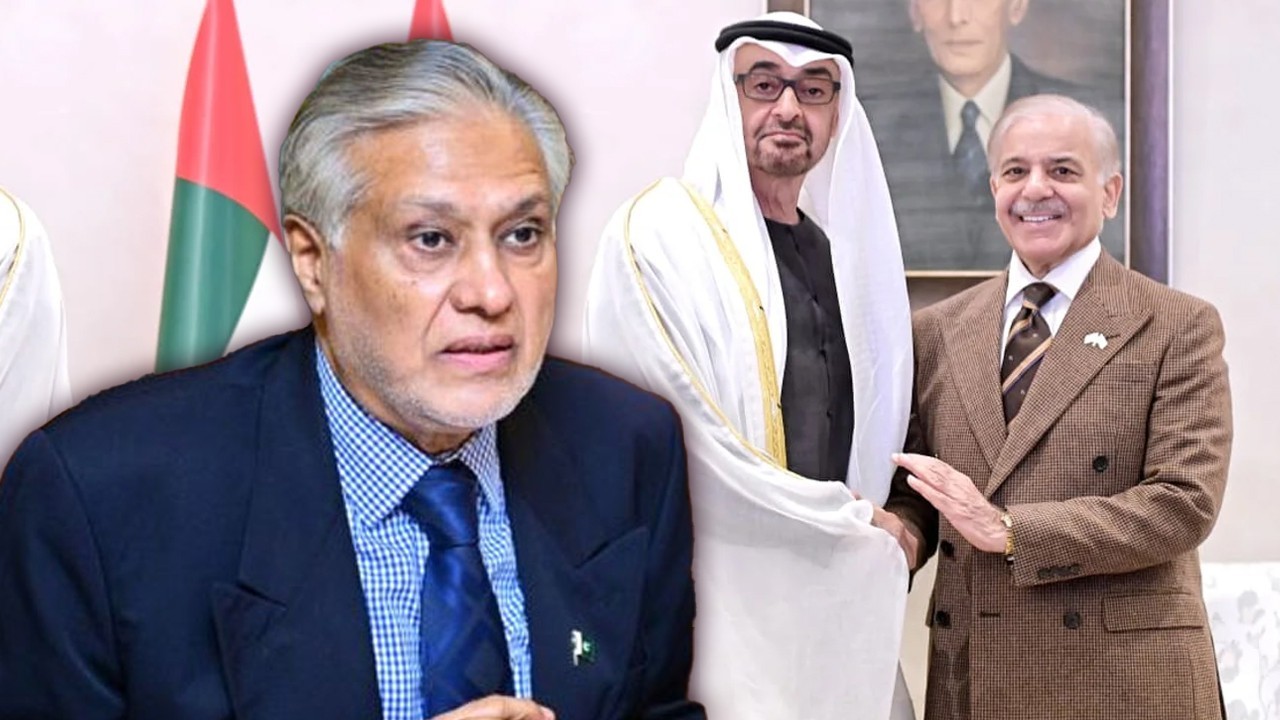
Deputy Prime Minister and Foreign Minister Ishaq Dar on Saturday described the recent visit of United Arab Emirates President Sheikh Mohamed bin Zayed Al Nahyan to Pakistan as “highly successful”, saying it strengthened bilateral cooperation and provided much-needed economic support at a critical time for the country.
Briefing the media, Dar said talks between Sheikh Mohamed and Prime Minister Shehbaz Sharif were constructive and forward-looking, focusing on investment, financial assistance and regional matters.
He added that Pakistan’s renewed engagement with key allies had helped stabilise its external position and ease diplomatic pressures inherited by the current government.
Dar said Saudi Arabia, China and the UAE had all played a vital role in supporting Pakistan through state deposits, helping bolster foreign exchange reserves during a challenging economic period.
He confirmed that the UAE was prepared to roll over a $2 billion deposit in January, easing immediate repayment pressures.
He also said Pakistan expected additional investment from the UAE against an outstanding $2 billion amount, signalling growing confidence among Gulf partners in Pakistan’s economic recovery plans.
Dar further revealed that the UAE would acquire a stake in the Pakistan Military Foundation, describing the move as part of broader defence and industrial cooperation.
According to the deputy prime minister, these developments marked a sharp contrast with the situation faced by the Pakistan Democratic Movement (PDM) government when it first came to power.
“At that time, Pakistan was facing diplomatic isolation,” he said, adding that sustained outreach had since helped rebuild trust with regional and international partners.
Confrontation with India
Turning to regional security, Dar referred to a recent four-day confrontation with India, claiming Pakistan’s armed forces had effectively countered what he described as exaggerated Indian assertions.
He accused New Delhi of spreading misinformation following the downing of aircraft, saying such claims had harmed India’s credibility.
Dar alleged that India launched 80 aerial assets towards Pakistan within a 36-hour period, of which 79 were neutralised. He said Pakistan had responded defensively and maintained restraint throughout the episode.
He stressed that Pakistan had not sought mediation or reconciliation efforts from any third country. “We did not ask anyone to broker peace between Pakistan and India,” he said, reiterating Islamabad’s position of strategic independence.
Recalling the aftermath of the Pulwama incident, Dar claimed India had used the episode as a pretext to advance its objectives in occupied Kashmir.
He further alleged that, under the guise of another incident in Pahalgam, India sought to undermine the Indus Waters Treaty, warning that such actions threatened regional stability and violated international commitments.
Dar also criticised India for targeting the Nur Khan Airbase, calling it a serious escalation that Pakistan was compelled to respond to in self-defence.
He said Pakistan’s Foreign Office had remained actively engaged with major global powers since April 22, making it clear that Islamabad would not initiate hostilities.
Dar added that Pakistan had challenged India to present evidence for its allegations and dismissed claims of a Pakistani F-16 being shot down as false.
According to Dar, Pakistan briefed the international community on its actions under Article 51 of the UN Charter, which allows for self-defence. He said that once Pakistan’s defensive operation concluded, the US secretary of state informed Islamabad that India was ready for a ceasefire.






Comments
0 comment